
LED pixel pitch and viewing distance: how close is too close?
Technology Reading time: 9 min
%20rotate(-67.5)'%20style='fill:%23fff'/%3e%3cpath%20d='M767.36,291.46V208.18a71.43,71.43,0,0,0-95.17-67.31V53.53H624.61V291.46h47.58V208.18a23.8,23.8,0,0,1,47.59,0v83.28Z'%20style='fill:%23fff'/%3e%3cpath%20d='M602,268.81l-33.65-33.65a29.74,29.74,0,1,1,0-42.06L602,159.45a77.33,77.33,0,1,0,0,109.36Z'%20style='fill:%23fff'/%3e%3cpath%20d='M1463.29,136.81a77.33,77.33,0,1,0,77.33,77.32A77.32,77.32,0,0,0,1463.29,136.81Zm0,107.06A29.74,29.74,0,1,1,1493,214.13,29.74,29.74,0,0,1,1463.29,243.87Z'%20style='fill:%23ffa76c'/%3e%3cpath%20d='M1463.29,327.15a29.75,29.75,0,0,1-29.74-29.74H1386a77.33,77.33,0,0,0,154.65,0H1493A29.74,29.74,0,0,1,1463.29,327.15Z'%20style='fill:%2399b4ff'/%3e%3cpath%20d='M1463.29,428.26a77.35,77.35,0,0,0,71.4-47.58H1391.9A77.34,77.34,0,0,0,1463.29,428.26Z'%20style='fill:%235236dd'/%3e%3cpath%20d='M1463.29,53.53A77.33,77.33,0,0,0,1386,130.86h47.58a29.74,29.74,0,1,1,59.48,0h47.59A77.33,77.33,0,0,0,1463.29,53.53Z'%20style='fill:%2399b4ff'/%3e%3cpath%20d='M1463.29,0a77.34,77.34,0,0,0-71.39,47.58h142.79A77.35,77.35,0,0,0,1463.29,0Z'%20style='fill:%235236dd'/%3e%3cpath%20d='M1546.57,136.81v47.58a29.74,29.74,0,1,1,0,59.48v47.59a77.33,77.33,0,0,0,0-154.65Z'%20style='fill:%2399b4ff'/%3e%3cpath%20d='M1629.84,142.74V285.53a77.36,77.36,0,0,0,0-142.79Z'%20style='fill:%235236dd'/%3e%3cpath%20d='M1302.69,214.13A77.33,77.33,0,0,0,1380,291.46V243.87a29.74,29.74,0,0,1,0-59.48V136.81A77.33,77.33,0,0,0,1302.69,214.13Z'%20style='fill:%2399b4ff'/%3e%3cpath%20d='M1249.16,214.13a77.35,77.35,0,0,0,47.59,71.4V142.74A77.33,77.33,0,0,0,1249.16,214.13Z'%20style='fill:%235236dd'/%3e%3cpath%20d='M1076.66,220.08a23.79,23.79,0,0,1-47.58,0V136.81H933.91v-11.9a23.79,23.79,0,0,1,40.62-16.82l33.64-33.65a71.37,71.37,0,0,0-121.84,50.47v11.9H868.48v47.58h17.85V291.46h47.58V184.39h47.58v35.69h0v5.1h.19a71.4,71.4,0,0,0,95,62.21v16a23.79,23.79,0,1,1-47.58,0H981.49a71.38,71.38,0,0,0,142.76,0V136.81h-47.59Z'%20style='fill:%23fff'/%3e%3crect%20x='1183.73'%20y='53.53'%20width='5.95'%20height='321.2'%20style='fill:%23fff'/%3e%3c/g%3e%3c/g%3e%3c/svg%3e)

Summarise this article
Whether in a company, in a bricks-and-mortar shop or on the web, brands simply have to think about the customer experience and, above all, optimise it. A memorable, high-quality customer experience is essential to build loyalty and to meet what the customer expects.
What is the customer experience?
The customer experience is the sum of the emotions and feelings a customer goes through before, during and after buying a product or service, as a result of the interactions they have had with the brand, the product or the service.
The customer experience can be digital — on a website, an app, a digital signage screen or a sales enablement solution, for example — or purely physical, in store.
For the AFRC (the French customer relations association), the customer experience "corresponds to the perceptions the customer has of all their interactions with the company throughout their purchase journey".
So how do you build a customer experience that is engaging and effective enough for the customer to entrust you with what is most precious to them: their time?
To build an effective customer experience you have to understand your customer and their needs — and even anticipate them. To get a clearer picture of your customer, it is important to gather, analyse and process the data you hold about them, using a CRM tool for example. Define your persona, your ideal customer, their profile, what holds them back, what motivates them, and so on. A targeted strategy lets you adapt your content, your offers and the messages you want to get across, and therefore personalise the customer relationship.
Personas let you optimise your purchase journeys and improve the experience your customers go through. They represent the different target profiles of your business. And targeting is the key to a strategy — and a customer experience — that performs.
Understanding your persona means understanding their motivations, their expectations, their behaviour and their preferences.
Take the interactive sales support as an example: with it, you can tailor your pitch to the customer in front of you, and therefore respond better to what they expect.
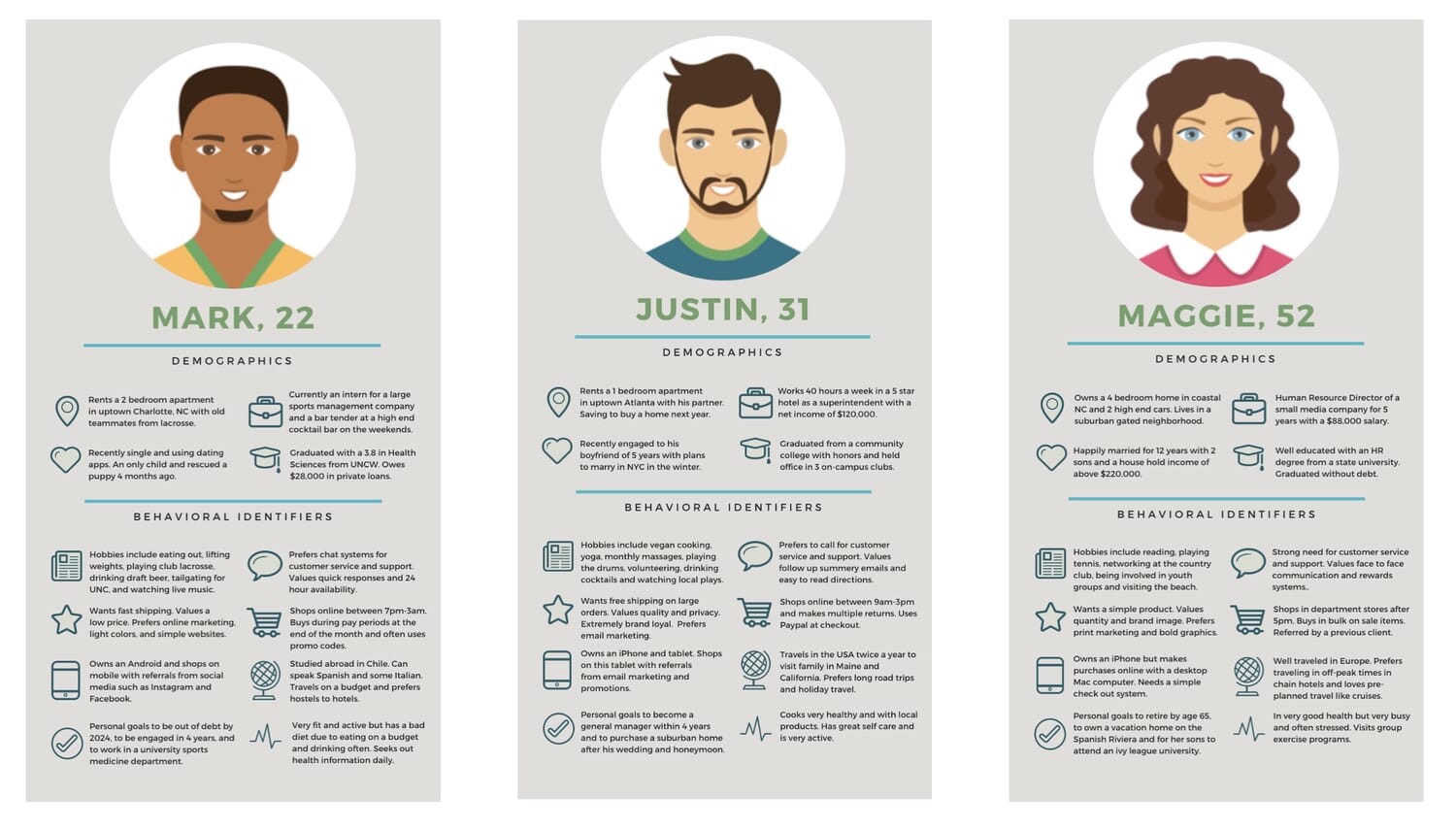 Persona example. Source: myinternetscout.com
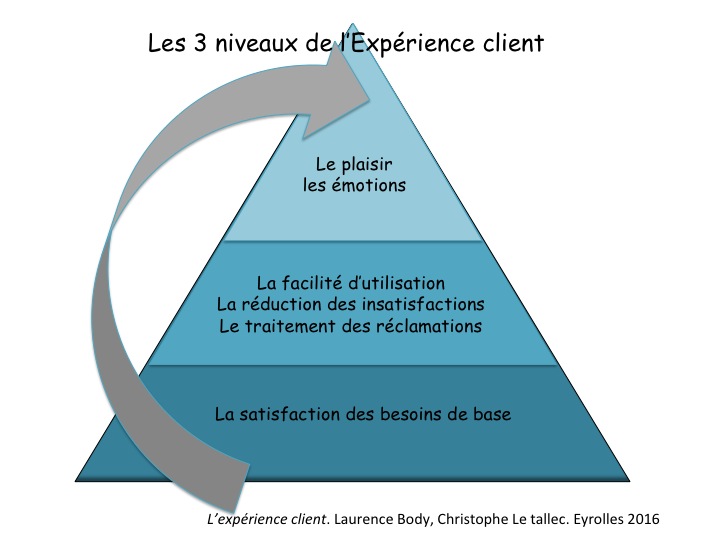
The customer experience puts emotion, rather than the product, at the heart of the brand-customer relationship. The product alone and its attributes are no longer enough to satisfy today's customer, who is more demanding than ever. It is therefore vital not to neglect any level of the customer experience.
Starting with the first level, meeting basic needs: this is the norm, the bare minimum the customer expects. But it does not stop there. The customer experience is inseparable from the employee experience, so do not overlook it. Internally, it is worth asking yourself this question: how can we work on the relationship to enrich it and bring value to it? Your teams have to be trained and aware of both the brand's improvements and its weak points. A successful customer experience starts with a successful employee experience.
In parallel, there is level 2 to work on, namely quality and performance. In particular, ease of use, reducing dissatisfaction and handling complaints. So you need to listen to your customer and understand them, so that you can anticipate, adjust their purchase journey and, as a result, delight them.
And finally the third and last level, the pleasure of emotions, which comes down to one question: how do you make the experience memorable for your customer? If you have built your customer journey so that it creates positive emotions, then you will generate the best ROI.
The customer has to feel like a participant in the brand. Involve them so that they feel the need — and above all the desire — to invest in the relationship.
To build an effective strategy, you first have to ask yourself the right questions: what are your values, what objectives do you want to reach, and how will you stand out from the competition?
Do you want to:
That is a lot of objectives to reach, and defining them will be essential to improving your customer experience.
Next, you will need to generate attachment to your brand. Emotion plays a decisive role in optimising the customer experience. Customers will buy who you are just as much as what you do. The emotions a customer feels create a strong attachment to your brand, and your brand image gains from it.
" We see our customers as guests invited to a party where we are the hosts. It is our job to make their experience a little better every day. "
Jeff Bezos
The POC lets you test and refine your strategy.
The Proof Of Concept phase is indispensable when you put a project management methodology into practice. It is a key step in demonstrating a project's concrete effectiveness and its feasibility to customers. It is also a mark of credibility.

First, you need to pin down the problems you face, then define your company's needs and objectives clearly.
Next, it is essential to bring together a team of committed colleagues around your POC. It takes six months on average to see the first results, so this project needs a team that wants to be there.
With the objectives set and the team in place, put your project to the test. Try it out with your customers.
The goal is to identify, anticipate and remove the risks in your project.

Website, apps, social networks, newsletters, chatbots... there are many touchpoints along the customer journey. The challenge is therefore to create an experience that is consistent, transparent and seamless across all of them. Consumers are increasingly well informed, demanding and independent, and they like to share their opinion. Working towards multichannel brand consistency is therefore a priority.
Phygital also helps to delight the customer experience. Retail — and even "New Retail" and its stores — has become more and more connected. Sales assistants carry tablets so they can tell customers whether a product is in stock, for example, faster than before. Brands offer entertainment at the point of sale, providing digital screens and every kind of device that enriches the customer experience.
During the 2020 health crisis, bricks-and-mortar shops multiplied initiatives that bridged the physical and the digital: live streams with influencers, immersive experiences, interactive tours of the point of sale, click & collect, and more.
Content is the channel of engagement. It creates affinity, turns prospects into customers and generates sales. Interactive content and experiences are measurable, and they provide rich information about content consumption, engagement and conversion. Measuring and analysing that data then lets you adjust and optimise your results. Take the example of assessing how effective your sales force is: thanks to tools that analyse the data collected, sales and marketing teams can improve sales reps' productivity, optimise their marketing strategy and therefore the customer experience. (To go further, read our article "how to boost your sales by equipping your sales reps with interactive sales support")
It is also possible to measure the user experience, using measurement tools such as:
With expectations that keep rising, the customer has become very demanding. They expect a lot from a brand or a service, so it is vital to make the difference by anticipating their needs and their expectations.
Creation, deployment, analysis and improvement: the virtuous circle
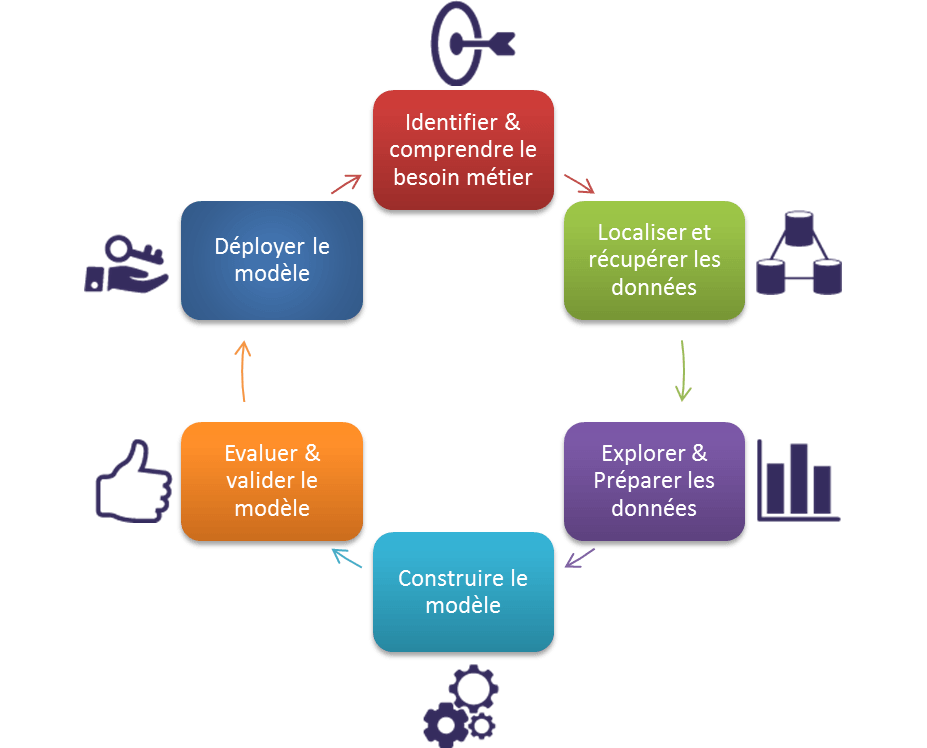
Source: Eurodécision
Once your POC is established, you move on to testing your project (user acceptance testing (UAT), stress tests, and so on). The testing phase lets you answer the question: "did we produce the result the customers wanted?"
Testing lets you identify the least favourable step or steps in your process, spot a defect and find where the process can be improved.
Watching how users behave in a real test lets you anticipate the support you will need to provide at rollout.
Focusing on the customer has to be brands' number one priority. For a customer to stay loyal to a brand, that brand has to have an emotional impact that resonates with them.
As we have seen in this article, to build an engaging customer experience, companies and brands have to put the customer experience at the heart of their strategy.
First, they have to understand their persona or personas, their expectations, their needs and their frustrations. Then they have to get to grips with the 3 levels of the customer experience: meeting basic needs, quality and performance, and the pleasure of emotions.
It is then vital to define clear objectives on which to build a customer experience (UX) strategy — bearing in mind that consumers are willing to pay up to 16% more for a product or a service that comes with a quality customer experience (Forrester study).
Finally, put testing phases in place: they will gather valuable data that can then be measured and analysed in order to improve the process. That virtuous circle — creation, deployment, analysis and improvement — is how you reach the holy grail, a customer experience that delights.

